
A drainage pond is a large basin dug into the ground to collect rainwater. It holds stormwater during heavy rains so the water does not flood nearby roads, buildings, or farm fields.
In California, building a drainage pond is a major construction project. Total costs for commercial projects usually range from $50,000 to over $500,000. Smaller farm or rural ponds cost between $20,000 and $40,000 per acre.
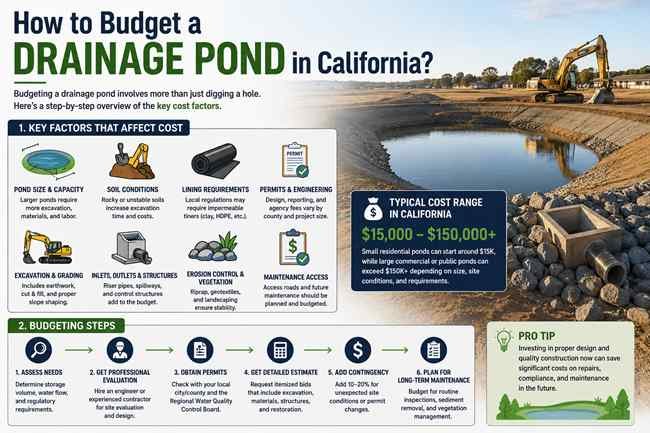
California has strict environmental laws and many types of soil. Because of this, your total price depends on four main things: how much dirt you move, the engineer’s design, state environmental permits, and structural parts like liners or concrete pipes.
Key Facts to Know
- Total Price Range: Building a complete drainage pond in California costs between $50,000 and $500,000+ depending on size and local rules.
- Moving Dirt: Heavy excavation costs $10 to $50+ per cubic yard. Hard rock or clay increases this cost.
- Engineering Plans: Hiring a civil engineer for soil tests and blueprints takes 5% to 8% of your total budget.
- Plastic Liners: Installing a thick plastic liner costs $0.50 to $6.50 per square foot. Liners stop water from leaking into underground water supplies.
- State Permits: Projects that disturb 1 acre or more of land must follow California State Order 2022-0002-DWQ. This adds $5,000 to $25,000+ in permit and inspection costs.
Complete Price Breakdown by Phase
Building a pond happens in several steps. The table below shows what you can expect to pay for each step in California.
| Project Step | What Is Included | Average California Price |
| Site Prep and Soil Tests | Testing how soil absorbs water, clearing trees, soil borings | $5,000 to $25,000 |
| Engineering and Blueprints | Water flow math, site plans, permit documents | $8,000 to $40,000 |
| Permits and State Fees | Filing with the state water board, city grading permits | $3,500 to $15,000 |
| Excavation and Grading | Digging the basin, packing down dirt, shaping side slopes | $25,000 to $250,000+ |
| Liner Installation | Fabric underlayment, heavy plastic geomembrane liner | $15,000 to $120,000 |
| Concrete and Outflow Parts | Pre-treatment mud boxes, drain pipes, rock spillways | $10,000 to $75,000 |
| State Water Inspections | Weekly site checks, water sampling for dirt levels | $5,000 to $25,000 |
| Total Estimated Cost | Complete Ready-to-Use Project | $50,000 to $500,000+ |
Commercial Excavation and Earthmoving Costs
Moving dirt is usually the largest physical expense of the project. Contractors in California charge by volume rather than area. This means you pay per cubic yard of soil removed. Average digging costs range from $10 to $50+ per cubic yard.
Digging Costs Step-by-Step
- Bulk excavation means digging out large amounts of soil, shaping the pond walls, and packing the remaining dirt tightly.
- The type of dirt on your property controls how hard the machines must work. Soft, sandy dirt is easy to dig out with standard excavators. Hard clay or buried rock requires large bulldozers with heavy steel rippers. This extra equipment doubles the hourly rate. Also, if you cannot keep the extra dirt on your land, you must pay heavy dump truck fees to haul it away.
- Get a soil test before accepting a contractor’s bid. Make sure your contract lists a fixed price per cubic yard and explains how extra rock removal will be billed.
Stormwater Engineering and Design Fees
Civil engineering and site blueprints take about 5% to 8% of your total construction budget. For example, on a $250,000 project, engineering fees usually range between $12,500 and $20,000.
Engineering Steps
- Hydrologic engineering is the math used to calculate how much rainwater will flow into your pond during heavy storms.
- California cities require ponds to hold specific amounts of water during major storm events. If your pond is too small, water will spill over during heavy winter storms and flood neighboring properties. This creates serious legal trouble for property owners. On the other hand, if your pond is built too large, you waste money digging a hole bigger than you actually need.
- Hire a licensed California Professional Engineer who specializes in stormwater systems. Ask the engineer to run a soil absorption test on your land before deciding on the final pond size.
State Water Permits and Environmental Rules
California has some of the strictest water protection rules in the country. If your construction project disturbs 1 acre or more of land, you must follow the California Construction General Permit (Order 2022-0002-DWQ). Environmental permits and compliance cost between $5,000 and $25,000+.
State Permit Rules
- A Stormwater Pollution Prevention Plan is an official document detailing how you will keep dirty runoff water from leaving your job site during construction.
- If you break these rules or build without a permit, the state water board can order you to stop work immediately. They can also fine you over $10,000 for each day you operate out of compliance. You must hire a state-certified developer to write the plan and a certified practitioner to test the water for mud after rainstorms.
- Submit your permit application through the state’s online portal at least 30 days before work begins. Also, hire your certified inspector early so they can place silt fences before heavy machinery arrives.
Liners and Outflow Concrete Structures
A dug hole alone is often not enough to manage stormwater safely. Ponds need concrete drain structures and, in many cases, plastic liners.
Dry Detention Basins vs. Wet Retention Ponds
- Dry Detention Basins: These ponds stay dry most of the time. They hold water for 1 to 3 days after a storm and slowly release it through an outlet pipe. They cost less upfront because they rarely need plastic liners.
- Wet Retention Ponds: These ponds hold a permanent body of water all year long. They require a steady water source or a plastic liner so the water does not drain away into the ground.
Plastic Liner Installation Costs
If your land has sandy soil that leaks quickly, or if local rules require protecting clean groundwater, you must install a liner. Buying and installing a plastic liner system costs $0.50 to $6.50 per square foot. This price includes protective fabric underneath, plastic liner rolls, and welded seam testing.
Extra Concrete and Drainage Parts
- Concrete Pre-Treatment Boxes ($5,000 to $20,000): Small concrete basins built at the pond inlet. They trap heavy mud before it reaches the main pond.
- Concrete Outlet Structures ($7,500 to $35,000): Concrete riser pipes with metal grates that control how fast water leaves the pond during a storm.
- Rock Emergency Spillways ($3,000 to $15,000): Heavy rock channels built into the top edge of the pond bank. They allow extreme overflow water to escape safely without washing away the dirt walls.
Long-Term Maintenance Costs
Building the pond is only the first expense. Property owners must also set aside money for annual care to meet local county health and safety laws. Annual maintenance usually costs 2% to 5% of the original construction price. This equals $2,000 to $10,000 each year.
Main recurring tasks include:
- Mud Cleaning and Dredging: Over time, dirt settles at the bottom of the pond and reduces storage space. Cleaning out the small concrete forebay box costs $3,000 to $8,000 every 3 to 5 years. Cleaning the entire main pond costs $15,000 to $50,000 every 15 to 20 years.
- Mosquito Control: Under California health laws, property owners must stop mosquitoes from breeding in standing water. Adding mosquito-eating fish or installing water fountains keeps the water moving so insects cannot lay eggs.
- Mowing and Weed Removal: Mowing the grass banks and pulling invasive weeds keeps the pond walls strong and prevents clogged pipes.
Frequently Asked Questions
A 1-acre drainage pond in California usually costs between $40,000 and $150,000+. Your exact price depends on how deep you dig, your soil type, whether you need a plastic liner, and your local permit requirements.
Yes. Almost all California cities and counties require grading permits before you move dirt. Also, if your project disturbs 1 acre or more of land, you must get a state water permit under Order 2022-0002-DWQ.
Dry ponds are usually 15% to 35% cheaper to build than wet ponds. This is because dry ponds do not need expensive plastic liners or permanent water pumps.